Summer in Manor brings the kind of heat that makes you move slower and think faster about your air conditioner. When the AC dies in the middle of the day, the impulse is to search for "emergency AC repair near me" and expect a technician on site within the hour. That happens sometimes, but often it takes a few hours for a crew to arrive, triage the problem, and source parts if needed. During that window you are responsible for keeping people safe, protecting pets, and preventing secondary damage to your home. The following is practical, experience-driven guidance for what to do while waiting for professionals such as ATX Heating & Air Conditioning LLC or any local AC Repair in Manor TX contractor.
Why acting right away matters An overheated house is more than an annoyance. Heat exposure can cause dizziness, dehydration, and for vulnerable residents, heat exhaustion or heat stroke. Electronics and vinyl flooring can warp under prolonged high temperatures. A failed AC sometimes indicates electrical problems that raise a small but real fire risk. Taking a few deliberate steps during the wait reduces health risks and prevents the situation from worsening, and it also helps technicians diagnose the problem faster once they arrive.
Quick assessment: what to check first When your AC stops cooling, resist the urge to open the cabinet and poke around unless you have clear training. A quick assessment from outside the unit and at the thermostat gives technicians useful information and keeps you safe.
Note the symptoms and timeline Write down what happened and when. Did the system make a loud bang, a grinding noise, or a soft click before stopping? Did it cycle on and off frequently before failing? How long has it been since the last filter change or any recent maintenance? These details cut diagnostic time. If you called a specific company like ATX Heating & Air Conditioning LLC, telling them what you observed can lead to a faster, better-prepared response.
Check the thermostat and power Look at the thermostat display. Is it blank, or is it showing an error code? Try setting it a few degrees lower to see if the system attempts to restart. Next, check the breaker box. A tripped breaker is an easy fix and common after compressor hard starts or shorted capacitors. If a breaker is tripped, switch it fully off, then on. If it trips again immediately, do not reset it repeatedly. That behavior can indicate a short or failing compressor.
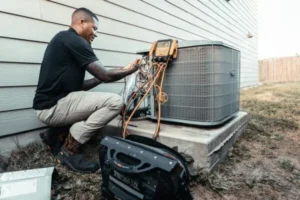
Inspect the outdoor unit visually From a safe distance, glance at the condenser outside. Is the fan spinning? Is there heavy frost or oil staining around the refrigerant lines or cabinet seams? Frost on lines can point to low refrigerant or airflow problems, but trying to defrost with a torch or by touching lines is dangerous and ineffective. If you see sparks, smoke, or smell burning, evacuate the area and call emergency services, then inform your HVAC provider.
Safety actions to take while waiting When an emergency technician is en route, take focused steps that reduce immediate danger and keep occupants comfortable. The list below is short and prioritized, so you can act quickly.
Move vulnerable people and pets to the coolest part of the home Increase ventilation using fans and open windows strategically Reduce internal heat sources by turning off unnecessary appliances Turn off the AC at the thermostat if you suspect electrical issues or smell burning Prepare a shaded outdoor space and coolers with water if evac is neededPractical details for each step Move vulnerable people to the coolest room. In single-story Manor homes that often means a north-facing room or a bedroom with window shades. In two-story houses, the ground floor tends to be cooler. If you have room in an insulated garage with shade and a portable fan, that can be a temporary refuge, but avoid spaces with running fuel-burning equipment.
Fans do not lower room temperature, but they increase comfort by promoting evaporation of sweat. Place a box fan in a window facing out during the hottest part of the day to push hot air out, and a second fan near the opposite side of the home pulling cooler air in during evening hours. If you have a portable evaporative cooler and humidity is not extreme, it can help. Avoid bringing a portable generator inside the house; exhaust fumes are lethal.
Turn off internal heat sources. Ovens, dishwashers, clothes dryers, and incandescent lights add several hundred to thousands of watts of heat. Pause laundry cycles and delay cooking that involves the oven or stovetop. If you must cook, use an outdoor grill or prepare no-cook meals to limit interior heating.
When to switch the AC off at the thermostat If you smell burning, see smoke, notice melted wiring, or the breaker trips repeatedly, turn off the thermostat and the outdoor unit at the disconnect switch. Repeated restarts can damage the compressor and increase fire risk. If the problem seems to be lack of cooling only, and the blower keeps running normally without unusual noises or smells, leaving the fan on set to "auto" can circulate air and may be acceptable until the technician arrives. When in doubt, turn it off and tell the technician what you did and why.
Hydration and heat illness prevention Mild dehydration amplifies heat stress. Keep water accessible, especially in households with infants, older adults, or people on certain medications such as diuretics or anticholinergics. Encourage frequent small sips rather than large amounts at once. Look for early signs of heat exhaustion: heavy sweating, weakness, headache, nausea, or fainting. If someone shows confusion, loss of consciousness, very high body temperature, or seizures, call 911 immediately. Emergency AC repair is crucial, but medical emergencies take precedence.
Protecting electronics, plants, and finishes Computers and sensitive electronics tolerate short-term exposure to heat, but prolonged high temperature and humidity can reduce lifespan or cause sudden shutdowns. Move laptops and desktop towers into the coolest available room and HVAC contractor in Manor TX avoid placing them directly on hot floors. For houseplants, move them to shade and mist leaves to reduce stress. If your vinyl flooring or hardwood starts to buckle, remove heavy rugs to allow expansion and place fans to encourage airflow.
When to consider leaving the house Leaving temporarily can be sensible. If you have older adults, infants, or people with lung or heart disease, and the home is rising above comfortable levels despite mitigation attempts, relocate to a friend, family member, shaded public space, or a hotel. Manor has several motels and cooling centers may open during extreme heat; local municipal social media pages often publish up-to-date resources. If you plan to go to a public space, bring necessary medications, water, and phone chargers.
What to tell the technician when they arrive A clear, concise briefing saves diagnostic time and money. Tell the technician:
- when the failure began and what you tried whether the circuit breaker tripped any unusual noises, smells, or visible signs like oil stains or frost recent service history, like last filter change or repairs where the thermostat and disconnects are located
If you already called a service like ATX Heating & Air Conditioning LLC, confirm the technician has your model number and any photos you took, such as a burned wire or an error code on the thermostat. Photos and timestamps can be very useful.
Understanding trade-offs technicians might discuss When a technician diagnoses the problem, they will often recommend either repair or replacement. The trade-off involves immediate cost, expected remaining life of the unit, and efficiency.
For systems over 12 years old with a failed compressor or leaking evaporator coil, replacement often makes more sense because a new system will cool more reliably and use less energy. Repairing a compressor on an old system may bring the unit back but leave you with higher utility bills and likely more failures in short order. If the failure is a capacitor, contactor, or blocked refrigerant line, a repair can be cost-effective. Expect a seasoned technician to explain expected remaining life, parts cost, labor, and performance differences in concrete terms. Ask for a written estimate and, when possible, get a second opinion.
Common emergency faults and what they mean Understanding likely causes helps set realistic expectations about time to fix and cost. Compressor failure, electrical shorts, refrigerant leaks, and clogged condensate drains are common in emergency calls.
A burned capacitor or contactor usually results in a quick parts swap, often completed the same day. Refrigerant leaks require locating and repairing the leak and then recharging the system, which takes longer and is more expensive. Compressor replacement involves significant work and sometimes requires a new system if the compressor is not compatible with existing components. Condensate overflow is simple to fix but can cause water damage if neglected. If the technician mentions needing a part that must be ordered, ask about interim measures to protect the home and occupants.
How to choose and evaluate emergency HVAC services When you search "emergency AC repair near me" you will find many options. Look beyond price and marketing claims. Prioritize licensure, insurance, local references, clear estimates, and responsiveness. The following five criteria help pick a trustworthy provider quickly.
Licensure and insurance verification Availability for same-day emergency calls and clear arrival windows Transparent, written estimates and explanation of repair versus replacement options Reviews that specifically reference timely emergency responses and lasting repairs A local presence in Manor or greater Travis County for faster dispatch and local climate experienceIf a representative refuses to put a price range in writing or pressures you into an immediate expensive replacement without diagnostics, pause. A reputable company, including ATX Heating & Air Conditioning LLC, will explain options and respect your decision to get a second opinion if you want one.
Preparing your home for a technician A bit of preparation smooths the visit and reduces time on site. Clear a pathway to indoor equipment, free exterior access to the condenser, and secure pets. If the technician needs to access attic or crawlspace, remove obstructions and flash a light into tight spaces. Have paperwork ready: model numbers, maintenance receipts, or warranty documentation. If you have a service agreement with a company, mention it at arrival.
After the repair: a short checklist Once the technician finishes, confirm they tested the system under load, that the thermostat reads correct temperatures, and that they left any replaced parts for your review if requested. Ask for a written invoice and explanation of any follow-up needed. If they replaced refrigerant, request documentation of the amount and type used, and a leak test result.
When to schedule preventive service If this emergency revealed a neglected maintenance history, schedule a preventive tune-up within the next month. Annual spring service, including filter replacement, checking refrigerant levels, cleaning coils, and evaluating electrical connections, avoids many emergencies. If your system is older or used heavily, consider twice-yearly checkups the season before heavy use.
A final practical anecdote A customer in Manor called after their AC stopped during a July heatwave. They had a newborn and two dogs. While waiting for the technician from a local company, they moved the family to the coolest downstairs bedroom, turned off the oven, placed a bowl of ice in front of a box fan, and set up cool packs in baby-safe wraps. The technician arrived, found a failed contactor and a weak capacitor, and completed the repair within two hours. The family stayed home, remained safe, and avoided hotel costs. That quick triage and the technician's preparedness made a stressful situation manageable.
Contacting help If you need emergency AC repair in Manor TX, search for firms with local dispatch, verified reviews, and clear emergency policies. Companies like ATX Heating & Air Conditioning LLC advertise emergency response, but confirm service windows and call-ahead details during the initial phone call. Keep a list of two or three trusted providers saved in your phone so you are ready the next time the AC gives out.
Waiting for a technician does not have to feel helpless. With focused, safety-first actions, you protect people and property, reduce the technician's diagnosis time, and increase the odds of a successful first-visit repair. Stay calm, document what you observe, prioritize cooling people and pets, and let professionals handle the mechanical and electrical work.
ATX Heating & Air Conditioning
13809 Theodore Roosevelt St., Manor, TX - 78653
(737) 406-8083
[email protected]
Website: https://atxheatingandac.com/